If you’re wondering, “Can a furnace leak water?”, the answer is yes. Oftentimes, this problem can be traced to one of the following issues:
- Condensation from high-efficiency furnaces
- Issues with the furnace humidifier
- Problems with the furnace drain system
- Leaks from the air conditioning system
- When to call a professional for furnace leaks
The good news is that in many cases, water leaking from a furnace is manageable. This guide will walk you through the top signs to look for and when you should consider contacting a professional.
Schedule Furnace Leak Repairs with RCM Heating & Cooling
Condensation from High-Efficiency Furnaces
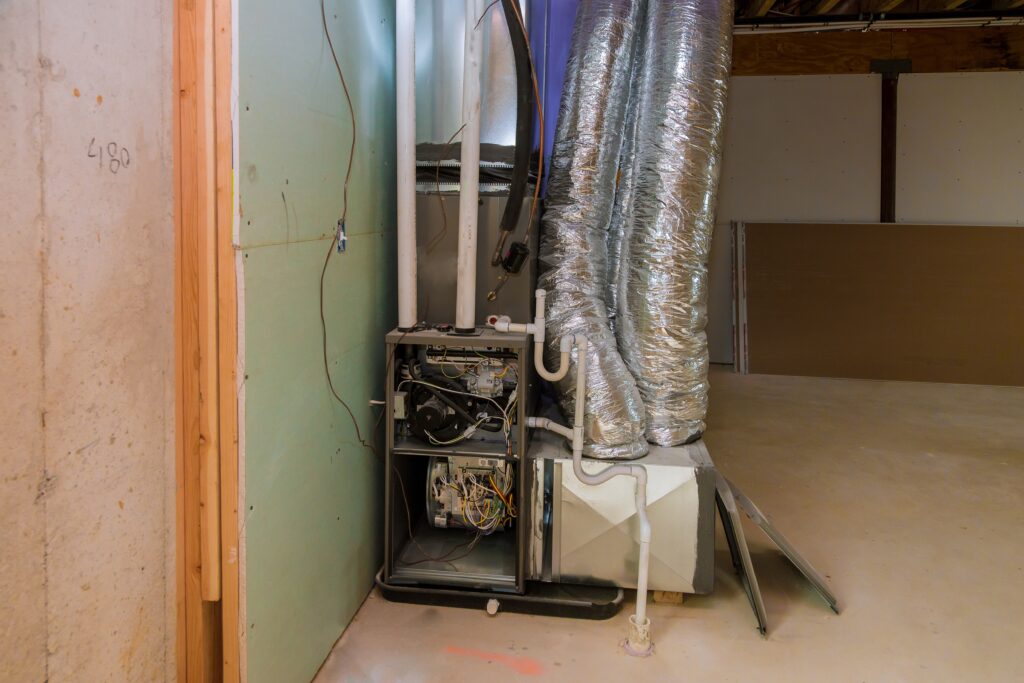
Are you asking yourself, “Why is my furnace leaking water from the bottom?” The answer may be condensation. In newer, high-efficiency models, a small amount of water is actually a normal byproduct of their operation. These systems pull so much heat from the exhaust gases that water vapor condenses, which is why they’re built with a drain line and sometimes a pump.
Trouble starts when something in this delicate process goes wrong. For example, a clogged condensate line or broken pump can cause water to back up, leaving you with puddles or damp spots. Look for the following signs:
- Water pooling near the base
- Water dripping directly from the unit
- Unexplained moisture around the furnace
These symptoms typically point to a drainage issue that needs to be addressed before it causes further damage.
Issues with the Furnace Humidifier
Many furnaces are paired with built-in humidifiers to add moisture to the air during dry winter months. While helpful for comfort, these systems can also be a hidden source of leaks. Because they connect directly to your home’s water supply, any issue with the water line (such as cracks, clogs, or loose fittings) can cause water to drip around the furnace. Other common problems include:
- Faulty solenoid valves (which regulate water flow into the humidifier)
- Mineral buildup from hard water
- Lack of maintenance
- Improper installation
Regular inspection and maintenance are the best defenses against humidifier leaks. By checking connections and replacing worn parts as needed, homeowners can reduce the risk of water damage and keep the system working as intended.
Problems with the Furnace Drain System
Your furnace has an internal drain system that’s responsible for carrying water away safely. When this system is working properly, you won’t notice any moisture around the unit. But if a component breaks or gets blocked, leaks are almost inevitable. Common issues include:
- Cracked or damaged drain pans
- Loose or disconnected drain lines
- Clogs that stop water from flowing
- Frozen drain lines during very cold weather
Even a small blockage can cause water to back up inside the furnace or spill onto the floor. And because these parts are tucked inside the unit, the problem isn’t always obvious at first. If you experience recurring leaks or hear gurgling sounds, contact a professional for inspection.
Leaks from the Air Conditioning System
Sometimes what looks like a furnace leak isn’t the furnace at all. If your air conditioner shares the same blower or drain line as the furnace, water from the AC can show up around the heating unit. Similarly, if the condensate drain line becomes clogged or the drain pan overflows, water can pool near the furnace, making it seem like the heating system is the problem.
Because air conditioners and furnaces often share components, it can be tricky to know whether you need a furnace or AC repair. Seasonal inspections can help prevent confusion and pinpoint the real issue.
When to Call a Professional for Furnace Leaks
While minor problems can be handled with basic troubleshooting, many require professional intervention. Attempting to fix gas connections, electrical components, or internal parts on your own can cause safety concerns and costly damage. You should call a professional if you notice:
- Water pooling around the furnace
- Frequent damp spots near the unit
- Visible rust, corrosion, or mold
- Strange noises or odors
The experts at RCM Heating & Cooling can quickly diagnose the issue and provide reliable, long-lasting repairs.